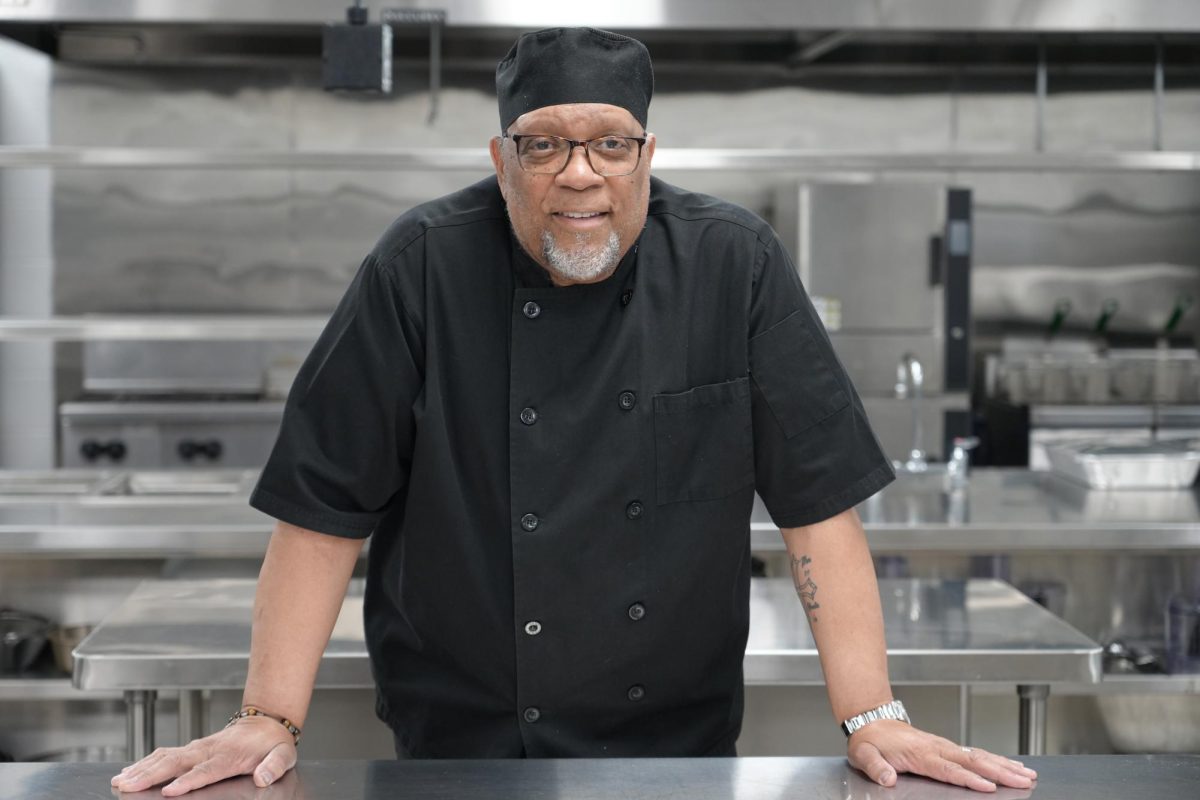
Anthony Chevalier had already been driving for an hour and a half, and he knew it was time to face his problem.
In fairness, there was no reason to be out for so long. He had a healthy family – a wife, two kids – and a nice property he bought five years ago. He wasn’t worried about what would be in his home. Instead, he was scared of what he was bringing to it.
He was scared because an hour and a half before he drove away from the hospital, he contacted his wife with his doctor and informed her that he was diagnosed with stage 4 prostate cancer.
So he took his car from The Woodlands all the way to his home in Cleveland. He was unsure of how the cancer would affect his family. He knew that to get better it would take months of treatments, days of tiredness and immeasurable amounts of pain.
“It literally felt like a sucker punch,” Chevalier said. “I felt like my whole world was crumbling.”
But if he let the thought of the affliction destroy him, it would only make it worse. He was determined not to let himself become defeated.
That Didn’t Take Long
The diagnosis came on a Friday in January 2025. That following Monday, he was already back to teaching. Because he was going to start his chemo treatments, he informed his classes of his condition. He did it for his safety.
“My doctor told me that once I started chemo, COVID could possibly kill me because it kills your immune system,” Chevalier said. “I wanted them to be aware of what was going on with me, and I definitely didn’t want them to be exposed to COVID and bring it back to me.”
Even with the chance coming to school could be lethal, Chevalier still showed up to work every day that he could. School acted as a distraction, preventing him from dwelling on his chemo and treatments.
“There were some days where I knew I should’ve stayed home, but it was better for me to come to work,” Chevalier said. “Being home everyday, knowing I had cancer, it was just too much for me to deal with.”
Chemo brings side effects
Chevalier underwent chemotherapy treatments every three weeks, and it was exhausting. He felt constantly nauseous, and it was hard to muster up the energy to walk. He spent most of his time on his sofa when he was home and in his chair at work.
To make it worse, the cancer spread from the prostate to his bones. On top of the effects from his chemo treatments, Chevalier now felt pain throughout his entire body.
“At one point it was all over – in my back, in my chest,” Chevalier said. “I was using a cane at one point because my legs hurt so bad.”
During his second chemo treatment in late February, he was given a bone supplement alongside his chemo. The pain was the most unbearable he’s ever felt.
“The two combined, it put me in so much pain,” Chevalier said. “I cried that day. A middle-aged man that cried because his body was in so much pain. At that point, I was at my lowest.”
As intimidating as Stage 4 and the pain can sound, there was still hope.
“He initially told me I had Stage 4, and when he told me that, it hit me really hard and I thought ‘Could I survive this?’” Chevalier said. “But the beauty of it was it hadn’t spread to my vital organs, so it was 100% curable.”
Loss of Normalcy
Alongside losing his hair and toenails, Chevalier lost one of his most beloved things. He lost his ability to taste.
He first discovered it when his wife cooked a bacon sandwich one morning, and he couldn’t smell it. Worried about his senses, he quickly took a bite and couldn’t taste one of his favorite meals.
He was devastated.
For Chevalier’s whole life, his passion for cooking fueled him from day to day, but now cancer had taken more from him. It was not only affecting his family but now his career. Nonetheless, if he could show up to work then he knew he had to help students cook – no matter how he felt.
“It felt awkward because that was my profession,” Chevalier said. “Certain smells would make me nauseous, but I didn’t want to stop them from cooking. I didn’t want them to feel neglected because I was sick.”
Culinary Program Steps Up
His sense of smell and taste were gone, but he couldn’t let that keep him out of the kitchen.
During the 2023-2024 school year, a new kitchen had been built for Kingwood Park’s culinary program, and the school needed someone to teach the class. Chevalier had already been running a catering program, where he served many members and organizations around the Greater Houston area. His professional experience made him a perfect candidate for the job.
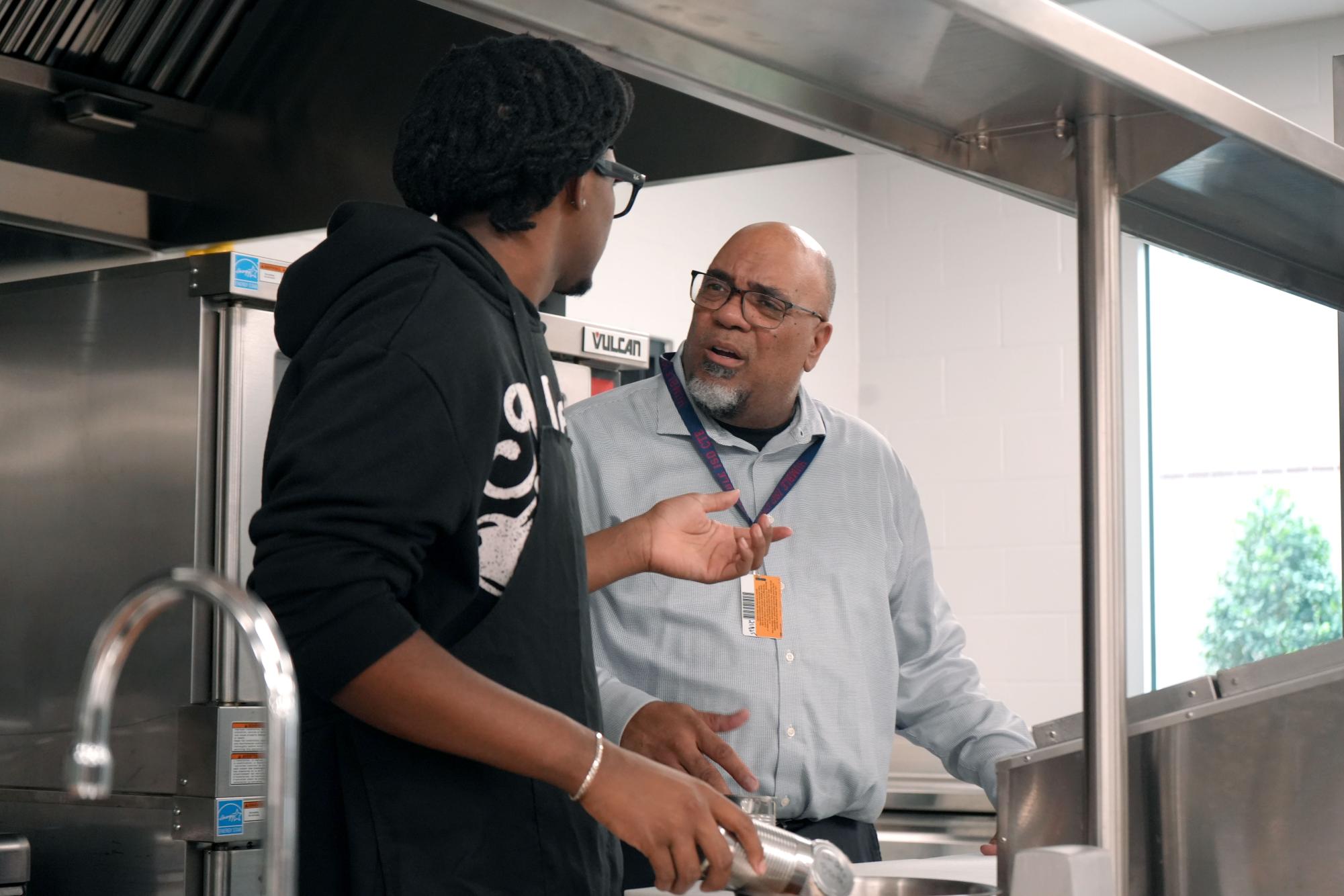
Not only was he responsible for teaching students about certain cooking, cutting and cleaning techniques, he also led the culinary 1 and 2 students through catering events. The program became well known for serving institutions and companies around the community.
Chevalier was credited for his leadership. He was able to help teach the students how to operate in a professional culinary environment. However, just a year into his tenure, he had to rely upon those same students to help him make it to the end of the events.
“We did a couple events near the end of the year, and during the outdoor events, they really picked up the pace,” Chevalier said. “The thing about chemo, it sucks all the energy out of you, but we all worked together to get through it. They were really there for me.”
Senior Anthony Henry was in his second year of the program when Chevalier was undergoing cancer treatments. When his teacher needed him to lead, Henry stepped up.
“I was being a leader, not by telling people what to do, but I was doing it myself,” Henry said. “I did become more verbal, and I learned how to use my voice as well.”
Support makes difference
The more that the constant sickness and treatments took a toll on him, the more support he received from others around him.
Paraprofessional Tiffany May found out about his health problems in January. She had previously dealt with cancer herself, so when she was assigned to assist him in class, she embraced her new role.
“I was just there to help them with whatever he needed,” May said. “His job was to teach, my job was to help. He’s a great teacher. He’s a great instructor. I cook a lot, so I got to be there with him, which was exciting for me.”
May’s assistance helped keep Chevalier in the classroom, allowing him to take needed breaks whenever he lost energy. Other members of the school’s staff supported Chevalier by stopping by and checking up on him, and they helped motivate him when days felt long. The energy he received was enough to keep his spirits up.
Family Ties
Through it all, however, he received the most support from his family – his wife of 38 years and his two grown children.
Chevalier always dreaded the thought of cancer. Not only did he have family that suffered from it, but he had also lost family from it.
“I always felt like it was going to get me because my father died from colon cancer,” Chevalier said.
Chevalier was only 24 when his father passed away at the age of 55. The loss had a major effect on his family. They grew closer together, but the affliction continued to spread.
His older brother, Fred Chevalier, was diagnosed with prostate cancer when he was 41, the same kind of cancer that Chevalier was diagnosed with at 62. Fred Chevalier was given a life expectancy of three to five years. He is now 69.
“He’s lived for 28 years, surpassing how long they thought he would live. It gave me hope,” Chevalier said. “It gave us an opportunity to bond. Talking about it everyday, you know, supporting each other, it made our family so much closer.”
While Chevalier relied on his faith as well, he credits his wife for being his “rock.” No matter how drained or depressed he felt, she was by his side.
“That woman is a saint in my life,” Chevalier said. “We’ve been married for 38 years, and ever since I found out about my cancer, we’ve bonded even more.”
Ring the Bell
Chevalier finally won on Aug. 5. He received a letter in the mail, and it confirmed he had beaten cancer.
For someone who is labeled “cancer free,” it is often a tradition to ring the bell at the doctor’s office. When Chevalier went to his appointment at Memorial Hermann in Humble, he finally rang the bell.
After all the treatments, after the long days where all he could think about was laying down and resting, he finally felt a part of him come back.
He knew that the effects wouldn’t go away overnight. He would still feel fatigue day to day from medication, and his tastebuds would forever be affected.
Still, Chevalier got in his car and drove straight home. This time, he didn’t take a longer route. He wasn’t bringing his family bad news, but instead the opposite.
Chevalier is forever changed; but in that moment, he felt like himself once more.