


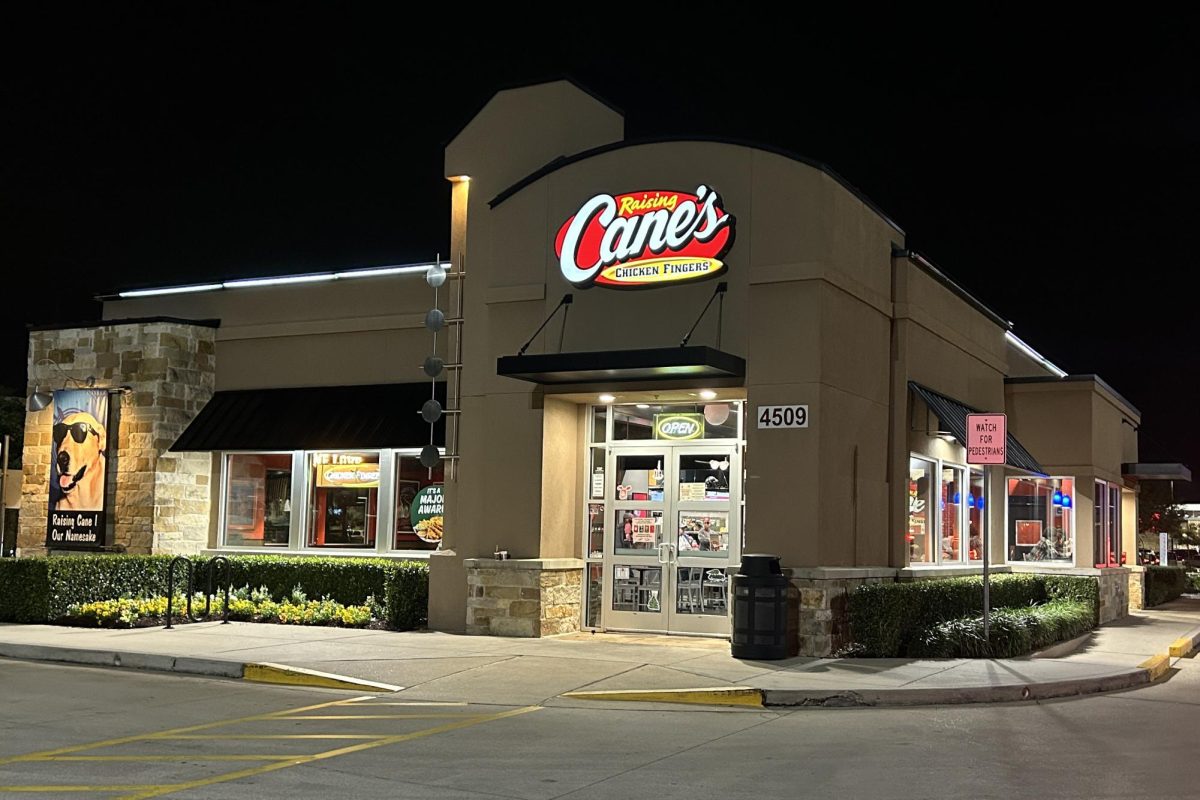
There are around five million fast food workers in the United States. Past estimates suggest around 30 percent of those workers are teenagers.
Junior Brianna Jedrzynski is one such employee. She works at Sonic, a mere five minute drive from Kingwood Park for up to 32 hours a week. She started working when she was 16 years old and needed to pay for her own car insurance and expenses. Sonic seemed to be the perfect fit.
“It’s one of the only places hiring so young because a lot of places want me to be like 18 or older,” Jedrzynski said. “And it’s just good to have a job where you can have some extra money for college and AP classes, that sort of thing.”
Money is a common motivator for teens to seek employment, and fast food restaurants often post competitive salaries to other minimum wage jobs. In Texas, the legal minimum wage is $7.50 an hour, but the median hourly wage for fast food in Houston is $12.78.
Junior Bryce Hickman started working at Whataburger to get a more consistent job, after working with his dad’s landscaping company Redzone Concrete since he was 8. He now works primarily as a fry chef.
“They were the first place to give me an interview and they weren’t paying too bad,” Hickman said. “So I just picked them.”
Schedule Time
Initially, one of the hardest things was adjusting to the consistency of the schedule that comes with shift-divided jobs. For junior Karma Gamble, who works at Freddy’s, having less control over her schedule is a new reality.
“The managers set a certain schedule,” Gamble said. “And they tell you the days that you’re working [which is] based off of your availability when you have the interview.”
If she can’t make her shift, Gamble must submit a notice two weeks in advance and get another employee to cover for her or get a write up. This is simple when she knows when she’s unavailable due to her involvement in Student Council and Culinary Arts, but sometimes unforeseen events can pop up.
“For instance, when I’m sick, I can’t say two weeks in advance,” Gamble said. “So it’s either I find someone to cover the shift or whoop de do, it’s a bummer for me.”
For Jedrzynski, it can sometimes feel like a lot to handle. She is involved in hospital clinicals for health science and aspires to be a nurse. Academically, she is taking Dual Credit US History and OnRamps Biology. The days when she has a two-hour clinical rotation at the hospital, her regular classes, homework and a shift at work, it can be exhausting. But it’s also necessary.
“[When I have clinicals,] my body’s a bit more tired,” Jedrzynski said. “And if I work that same day, then it sucks, but I get it done. I’m fine. I make it work.”
Customer Trouble
Jedrzynski remembers several customers whose orders bordered on compulsiveness. Some customers ask for jalapenos and pickles in their drinks. One woman in particular asked for exactly 27 pieces of ice.
“This woman, she rings in, she says to me, ‘Oh, I want a Coke with 27 pieces of ice,’” Jedrzynski said. “And I was like, ‘Oh, so like light ice?’ She’s like, ‘No, 27 pieces of ice.’ I don’t ring it in as 27 pieces of ice… I was like, ‘Oh, just give her a little bit of ice. It will be okay.’”
Jedrzynski thought she was done with the customer, but a few moments later another worker came in and told her the customer needed a new drink.
“This woman is having a whole screaming fit over the fact that her Coke has more than 27 pieces, it had 41,” Jedrzynski said. “[The second time,] I personally counted them one by one, gloved up, picked them up by hand, and then she was happier.”
Customers also have come in aggressively. When a man’s card was rejected, he reacted angrily and told her not to make him get out of his car.
“He literally starts threatening me,” Jedrzynski said. “He’s like, you’re trying to steal from me. So I told him, ‘Oh, I’m sorry about this. I’ll go get my manager.’”
Jedrzynski told her manager, and he went to handle it.
“I see him go to this car and he’s like talking to the dude and eventually gets to yelling,” Jedrzynski said. “But eventually, [my manager] comes back in, the guy is going, we got the money – with a $10 tip at that.”
Gamble said customers are the hardest part about working in the fast food industry
“In some cases, they get mad about things that you can’t control or like the price of things,” Gamble said. “Or if something gets done wrong in the back, but you’re just handing it to them.”
Lifelong Impact
Kingwood Park substitute coordinator Sara Walsh started working in fast food when she was 15 years old as a party manager and mascot for her local McDonald’s.
“They used to have birthday parties in the ball pit play area,” Walsh said. “So I was the birthday party girl. And then I also had to wear the Grimace suit sometimes, like that big purple guy. Occasionally, I’d have to go out by the road and wave at people as Grimace.”
When Walsh turned 16, she could legally handle food and started working in the kitchen and behind the counter.
Walsh says the lessons she learned from working in the fast paced and often demanding environment taught her life lessons and have given her skills she continues to utilize on a daily basis, especially with time management and dealing with bosses.
“Your boss, your managers make a difference in your work life,” Walsh said. “It’s very important because they could make your day miserable or they could make it better.”