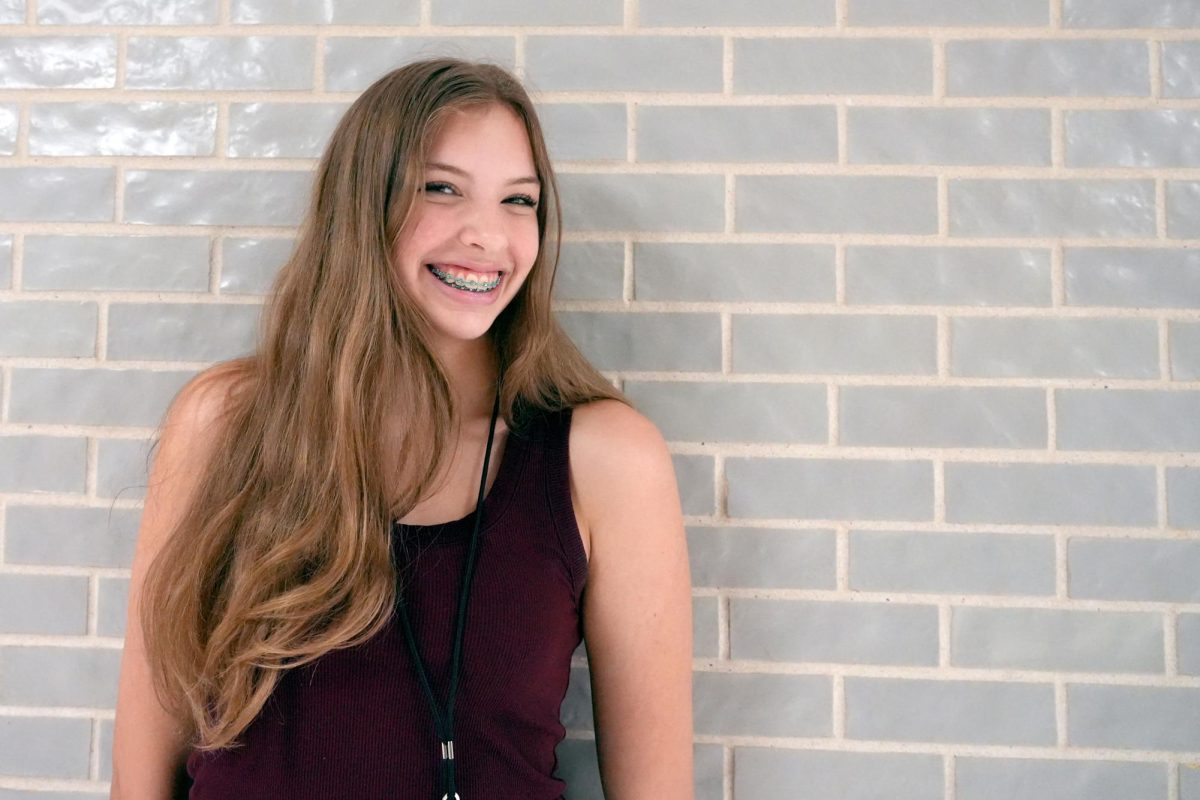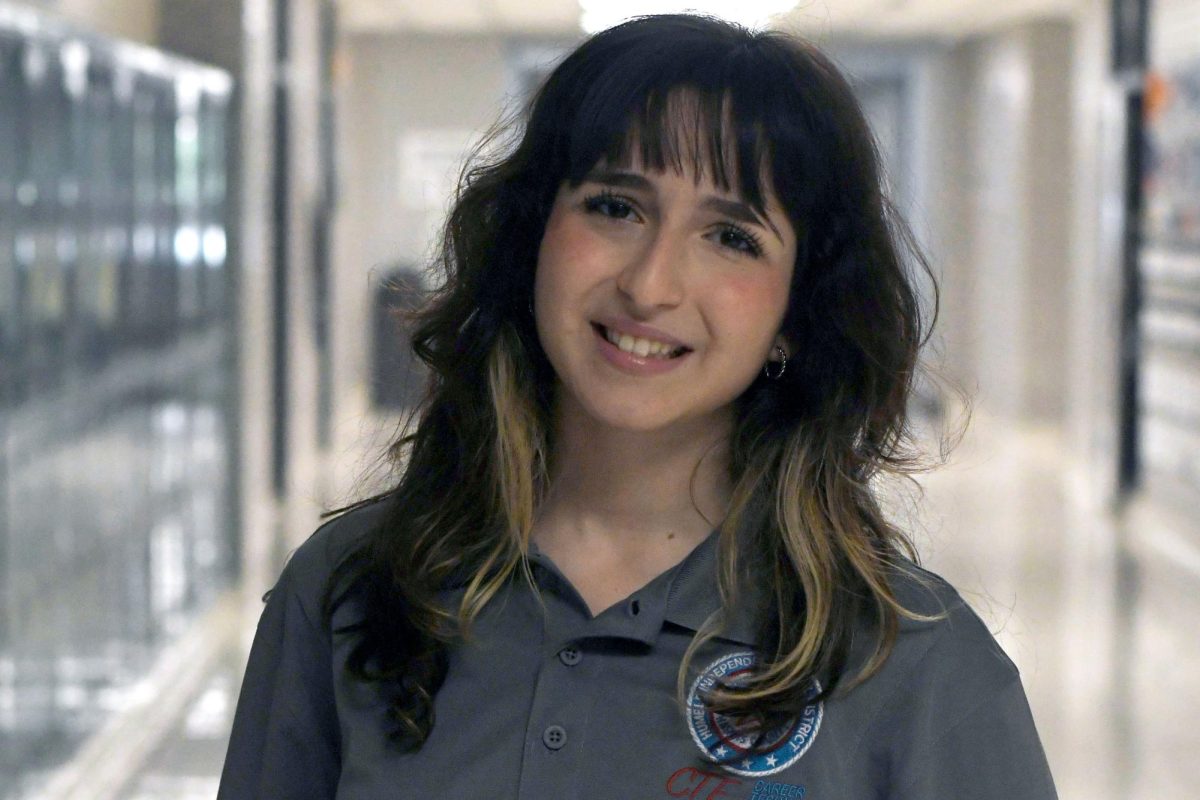
At the end of her freshman year, Maria Maldonado was eyeing taking an engineering class in her sophomore class lineup. However, there was no such class available.
“I got to pull some strings and was able to come in early,” Maldonado said. “So I came in as a sophomore and took Aeroscience 1, instead of as a junior, like most people do.”
Because of this accelerated course, Maldonado finished the typical path students take a year early. So, at the end of her junior year, she and Aeroscience teacher Glenn Taylor came up with a plan on how to allow Maldonado to keep learning the subject.
Taylor suggested something that had never been done before – an Aeroscience 3 course. It would have to be taken as an aide period, but Maldonado would work at a more advanced level than her peers.
This course had never seemed possible because of Aeroscience classes only being available to juniors and seniors. Still, Taylor believed Maldonado could handle the workload.
“Aeroscience 3, it’s just me. I have got no other help,” Maldonado said. “I also have to create all of the items, all the components myself.”
The end goal of the course is different from its predecessors. Aeroscience 1 and 2 only have to build rockets to go slower than and break the speed of sound – or go subsonic and transonic. Maldonado’s rocket must go faster than the speed of sound.
“I’m not only trying to break the speed of sound, but I’m trying to go past the speed of sound, which is a term called supersonic,” Maldonado said.
Being the only person ever in her specific course, Maldonado had no broad view on what the class would be like for the year. It was up to her to set the standard of how things would be done.
“Aeroscience is really big on building up what has been already done – like looking at the past and trying to build from there,” Maldonado said. “But I don’t have any past, so I have to create that new stepping stone for people.”
After learning her rocket would be a solo project, Maldonado set a plan for herself.
“I started in June researching things,” she said. “And then I went from June all the way to maybe mid-October and just purely researched to understand every part of my rocket. Then from October to about December, I was designing the rocket in our simulator RockSim. After I designed the rocket, I started creating and putting things together. I presented it to a board in January for approval, which all teams have to do, and then I got my approval and I started building.”
Maldonado will launch her rocket on May 8 with the rest of the Aeroscience students in Anahuac. There will be four rockets launched that day, with Maldonado’s being the only solo mission.
Taylor has watched Maldonado’s progress throughout her years in the program. He knew that Maldonado had it in her to take on something that had never been done before.
“I think if there’s ever a student that I’m going to trust with this kind of a mission, it would be her,” Taylor said. “So if she didn’t have the work ethic, if she was a different caliber of student, no way.”
Taylor’s trust in Maldonado is a crucial part of her success. Her power to stay motivated, even as the only person on her team, is an inspiration to many.
“She has to be an independent worker, otherwise she’s going to get nothing done,” Taylor said. “She lives or dies by her and only her.”
Maldonado’s work has not gone unnoticed by her peers. Because she has been placed in an Aeroscience 1 class as an aide, other students in the room watch as she furthers her progress on the rocket.
Senior Ivan Rodriguez, the leader of the Aeroscience 2 rocket aiming to go transonic, is also in the class period with her.
“She’s always doing something,” Rodriguez said. “There’s a lot to handle, and she handles it very well.”
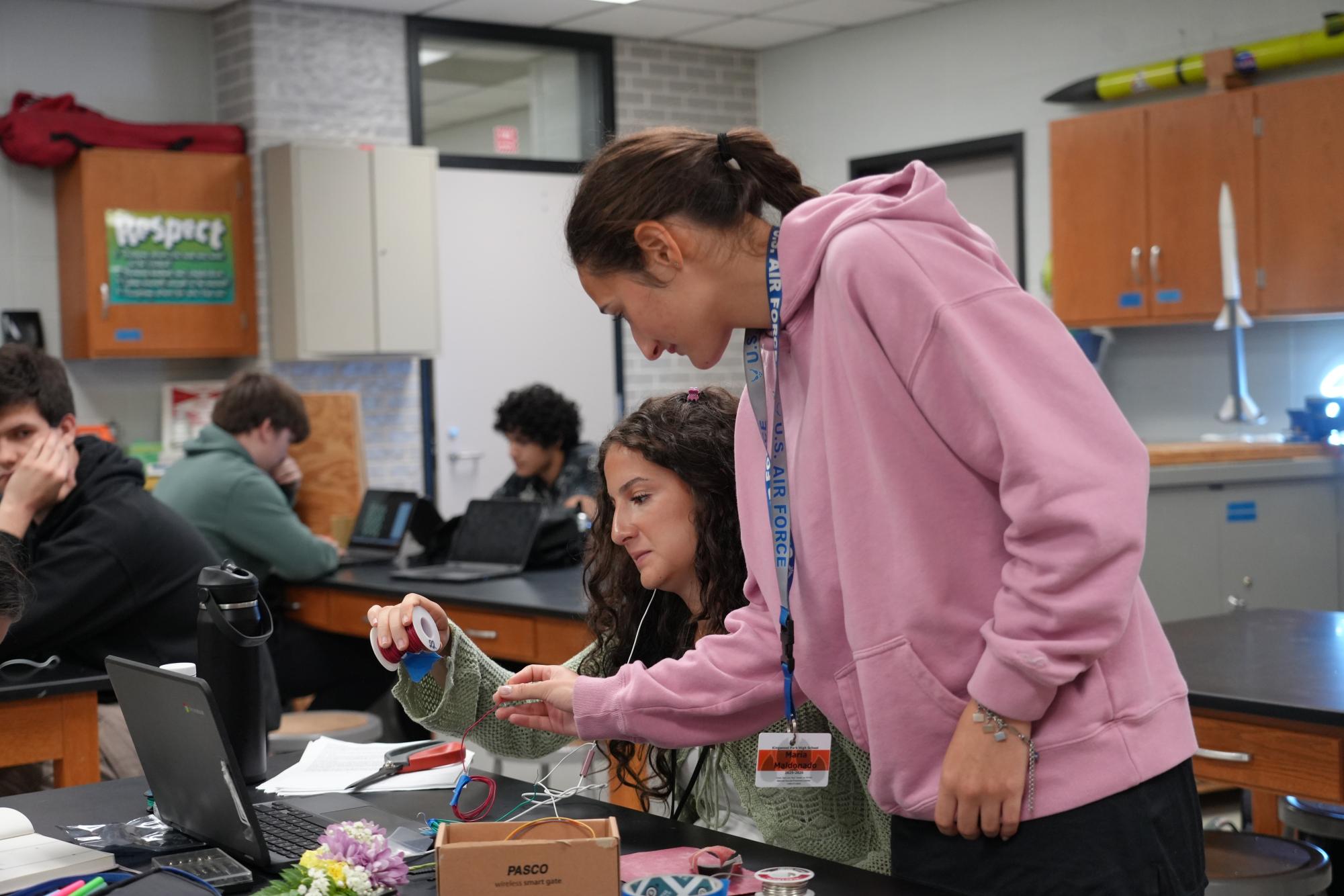
(Emerson Harris)
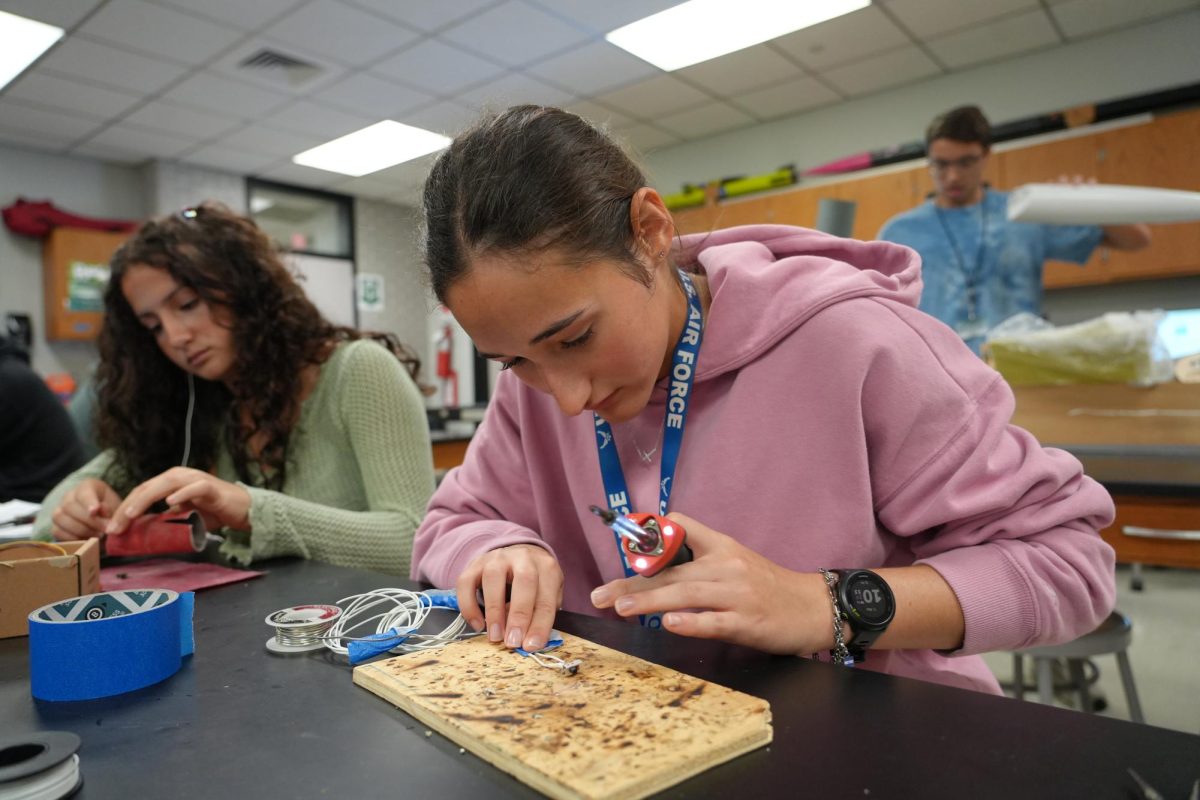
While Aeroscience 1 and 2 students have access to many off the shelf parts, Maldonado does not have this luxury. From the body to the fins, Maldonado has designed and made it all with her own two hands.
“Maria makes a lot of the parts herself,” Rodriguez said. “With Maria, almost everything except maybe the engine, she’s designed from scratch. And plus, she’s completely on her own, so that’s another level of difficulty.”
While she has braved the challenge alone, Maldonado has been a trailblazer for what could be the future of the engineering and aerospace programs.
“I guess it’s like breaking the ice to see if KPark kids can do something this heavy in a year,” Maldonado said. “It is really cool.”
Though this course may not see the light again for a few years, Taylor and Maldonado’s idea will create a legacy for all kinds of students in the program to look up to. Maldonado has some advice for anyone who may want to pursue the same path as her.
“Don’t be nervous about what you do or don’t know,” Maldonado said. “Just own what you do know and then look for what you don’t.”