When Americans think about sports, the lineup is predictable: football, basketball and baseball. These sports are woven into school culture. Pep rallies revolve around them, schedules adjust for them, and entire seasons are built around them. However, while we celebrate those sports, we’re overlooking something massive: Cricket.
Cricket isn’t a small, niche sport played by a handful of countries. It’s the second most popular sport in the world. Billions of fans follow it passionately across India, Pakistan, Australia, England, South Africa, Caribbean, and beyond. When major tournaments like the Cricket World Cup or T20 World Cup happen, entire cities light up with excitement. Families gather around TVs the way people do for the Super Bowl.
In the United States, cricket is often met with one of two reactions: confusion or ignorance. The confusion usually sounds like this: “Isn’t that the one that lasts five days?” While traditional Test Cricket can last that long, modern formats are a completely different story. T20 Cricket, for example, is fast paced and explosive, a full match takes about three hours which is roughly the time length of a NFL game. One over can flip the momentum, one swing of the bat can clear the boundary for six runs and send a stadium full of people into chaos.
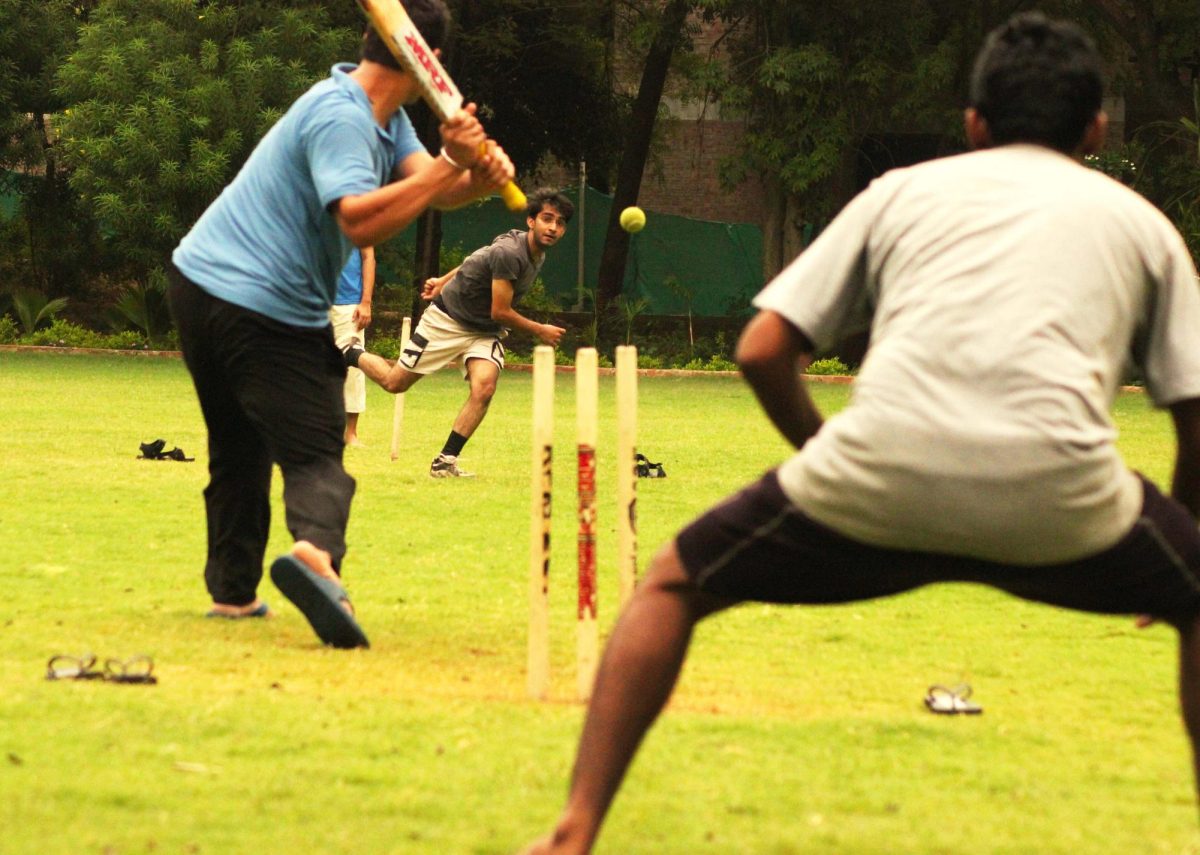
If you think baseball has tension, imagine every pitch having the potential to completely shift the game. Cricket blends athleticism with strategy in a way that feels almost like a live chess match. Bowlers vary speed, spin, and angle to outsmart batters. Captains adjust field placements constantly, trying to anticipate the next move. Batters have fractions of a second to decide wether to defend, rotate strike, or swing big.
Then there’s the atmosphere, if you’ve never seen highlights of an India vs. Pakistan match, you’re missing out on one of the most intense rivalries in global sports. The energy is electric, the crowds are loud, and the stakes feel enormous.
So why does a sport this big barely register in American school culture? Part of it is history. Baseball, football, and basketball were either invented or evolved in the U.S. Cricket, on the other hand, flourished elsewhere. However, America today isn’t the America of 100 years ago, it’s one of the most diverse countries in the world. Walk through any high school hallway and you’ll meet students whose families grew up cheering for cricket the same way others grew up cheering for the Houston Texans.
Recognizing cricket doesn’t mean replacing football or canceling basketball season. It just simply means expanding the category of sports students can pick. Furthermore, here’s the interesting part: Cricket is already growing in the United States, international matches have been hosted here. Professional leagues are forming, youth participation is increasing, especially in states like Texas, Florida and California.The audience and talent is here and the interest is growing. We just don’t talk about it enough.
Sports have always been a way to bring people together. They create shared experiences, they spark conversations, and they build community. If we value diversity and global awareness, then paying attention to a sport followed by over a billion people seems like a good place to start. Cricket is global, and in a world that’s more connected than ever, maybe it’s time our sports conversations reflected that.