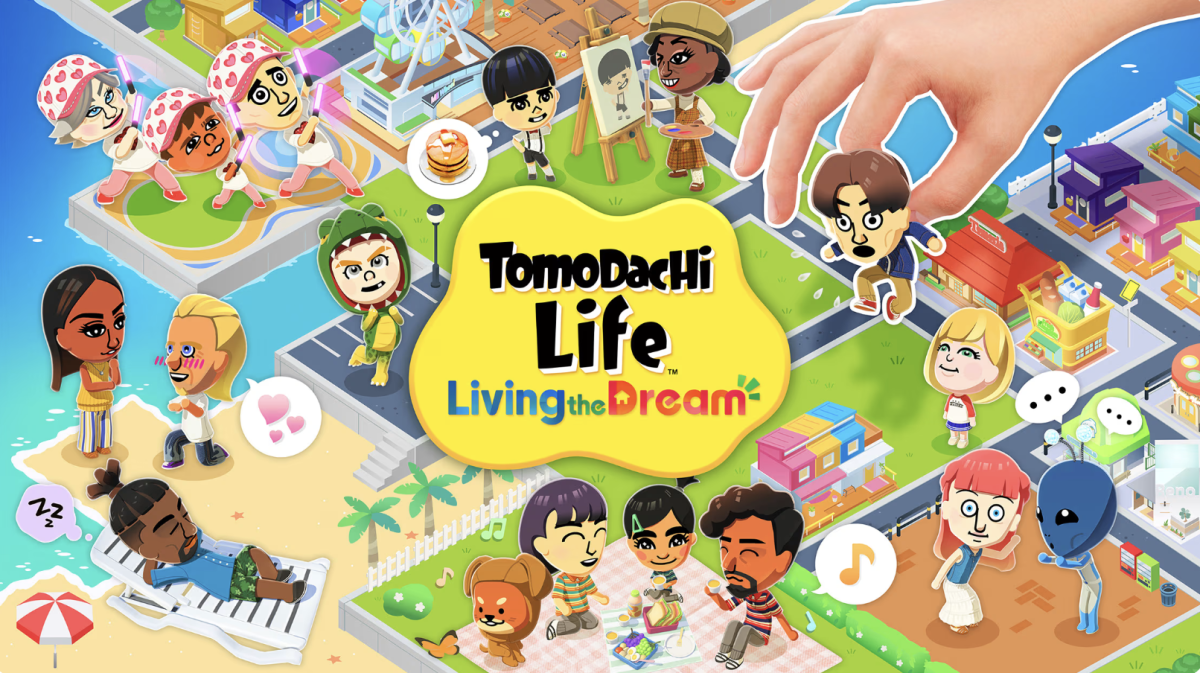
Tomodachi Life: Living the Dream is an island life simulation game by Nintendo that was released to the Switch and Switch 2 consoles on April 16. It is a remake of a 2009 3DS game called Tomodachi Collection, originally released in Japan, and later a 2013 version called Tomodachi Life came out for the US and Europe.
Personally, the original game was my favorite game growing up. I loved the idea of being able to watch over a remote island. I didn’t have to build anything, I didn’t have to take intense care of the islanders, I could just sit back and watch them do their own thing. As a person who doesn’t like super intense games, this one sounded right up my alley. So, come Christmas 2016, I opened up a box and saw a Nintendo 3DS XL and a copy of Tomodachi Life, and I was so excited I ran around the room screaming. Ten years, 300 hours, and 800 play sessions later, Living the Dream is announced. Imagine my excitement when, on a random school day, I see the teaser trailer for a remake of my favorite childhood game of all time.
The game has a certain charm to it that no other game has, and that has been what captivated me to keep playing it for these past ten years. It’s full of randomly generated events, like maybe your Mii fell over and they need help, or they fell asleep and you can watch their dream. It’s not a game that you grind for hours and hours, however. Living the Dream is a relaxing, slow-paced game where you log in for about twenty minutes a day and watch over your islanders.
Comparing Living the Dream to the original game, there are many negative differences. The most apparent difference is the lack of the Concert Hall. In the original game, this was a place where you could pick a genre of song, write the lyrics, and have your Miis perform in a concert. In the early to late 2010s, many videos of parodies of already-existing songs, or even original songs, were made in the Concert Hall. This was what gave the game its popularity in the first place. Seeing it not make its way into the remake is extremely disappointing. On top of that, various mini games, like Judgement Bay and Quirky Questions, were removed, buildings like the Observation Tower and the Rankings Board aren’t in it, and even special cutscenes were scrapped in the new game.
Living the Dream has no limits. Way more creative liberties can be taken in this game than the original. You can make anything you want with the new free draw features. In the original game, you had very limited options for the Miis and the island itself. Maybe 30 hair styles, 10 skin colors, and you couldn’t adjust the buildings in any way. But in Living the Dream, you can customize your Mii and your whole island exactly to your liking. I have been able to make so many more characters on my island, and not strictly sticking to characters that are human. You can make buildings, houses, treasures, and food (even how the food tastes!) I have seen people make whole castles, recreate artistic masterpieces on their Miis, and paint photo-realistic treasures.
All in all, Tomodachi Life: Living the Dream, and the original installment, will always have a special place in my heart. The game practically watched me grow up into who I am today. So many amazing, random memories were made playing this game with friends, family and even by myself. If you’re looking for a game that is low maintenance, relaxing, and full of endless possibilities, Tomodachi Life: Living the Dream on the Nintendo Switch is definitely the game for you.