The school is usually quiet once the day is over. However, in the Upper LGI, a group of students stays behind, scrolling through UIL review sheets and working through problems that many students never see. For senior Jacob Rother, this routine has become a regular part of his life, bringing years of interest and practice together.
That interest started long before any competitions.
“In middle school, I took a class on game development with a game-making software called Construct 3, and I really enjoyed it,” said Rother, who graduated No. 4 in the senior class. “I thought it was really interesting, and I actually ended up working on it outside of class. I liked it that much, so I just knew that I wanted to do something in computer science.”
What began as a class, quickly turned into something he spent time on outside of school, building his interest on his own. Rother has used his interest in the field and his talents to reach the UIL State Academic Meet in Computer Science Written. He won districts for the second year in a row and finished third at regionals. He will compete at the University of Texas-Austin on May 18.
His path onto the UIL academic team began with encouragement from his computer science teacher, Jonathan Nicholson.
“My computer science teacher, Mr. Nicholson, suggested that I should be on the team, and I figured, you know, why not?” Rother said. “I like computer science, I want to learn some new stuff, so I joined, and it was a lot of fun.”
This very simple decision of joining the academic team, turned into something very serious later on. Rother plans to study computer science at the University of Texas-Austin next fall. Nicholson said he noticed Rother’s abilities early on. What especially stood out was Rother’s consistent work ethic.
“He was the smartest one out of all of us, including me,” Nicholson said. “One year he finished two years’ worth of work in one semester. Senior year, he finished a year class in a weekend and passed a state test on it.”
This level of work made a ton of difference in competitions.
“We went into every competition knowing that if he didn’t do well, we didn’t do well,” Nicholson said.
Most of the preparation for the competition happens after school.
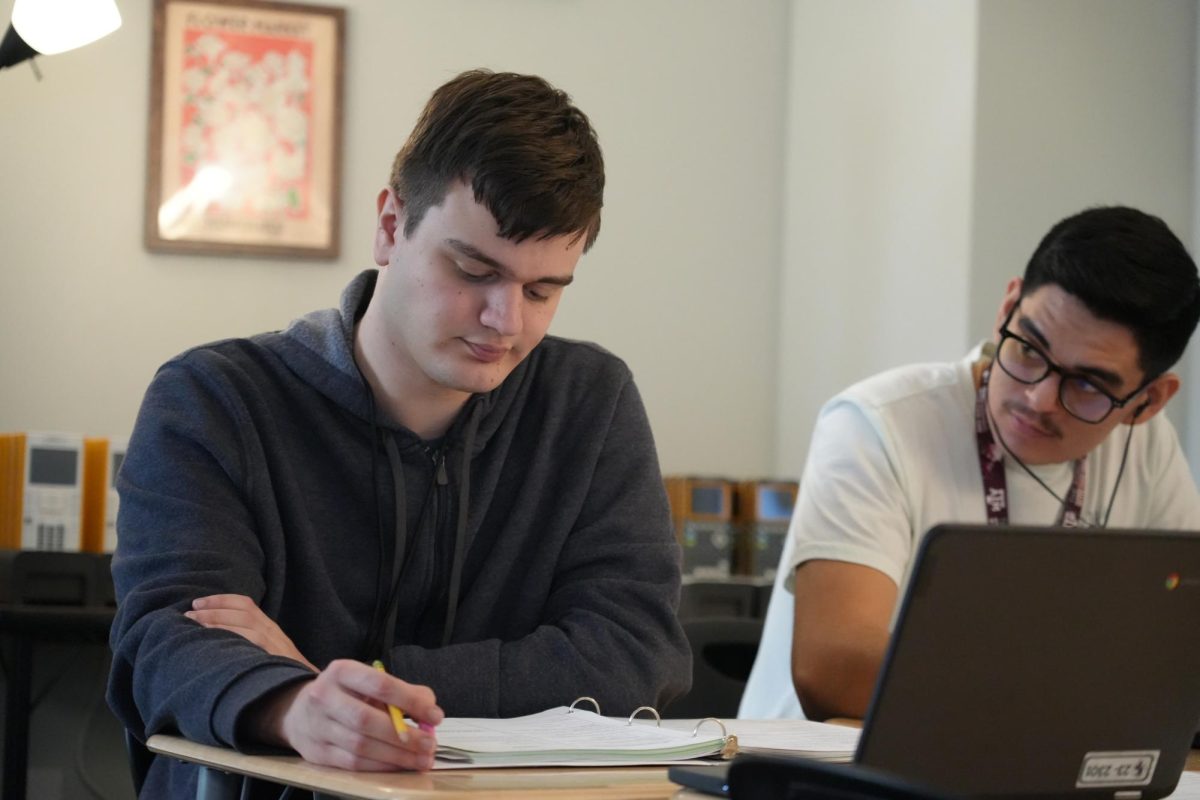
“After school, we go to the upper LGI, and we look up previous UIL tests,” Rother said. “There are two parts: the written and the practical, so we study previous tests, and sometimes we also try to solve the practical problems too.”
Practicing like this each week helped him become more comfortable with the format and the expectations of competitions.
When Jacob first joined, the confidence was not there.
“At first, I did not know what I was doing,” he said. “I would be lucky if I got one practical question right.”
He realized early on that something needed to change.
“I also didn’t really have a dedicated study time, so I figured I should probably change that,” Rother said.
Spending more time practicing and working with teammates helped him improve over time.
Even with that progress, not every competition went as planned.
“At earlier meets this year, I didn’t even get top six, which was kind of discouraging,” Rother said. “I had gotten first in district last year, so I was expecting to do well.”
Instead of dwelling on it, he focused on what to do next.
“I just figured, you know, stuff like this happens, I guess I just have to study harder and do better next time,” he said.
Preparing for UIL computer science can also be unpredictable.
“They teach you stuff that’s more like college-level, which is kind of annoying,” Rother said. “You end up learning it, and then you never see it on any other tests again, so you kind of learn it for nothing. But then when you think you don’t need to know it, they put it on the test again.”
This makes it difficult to know exactly what to focus on while studying.
Despite the challenges, Rother said the experience is often misunderstood. The time, effort, and level of content involved go beyond what many people expect.
“It’s a lot more than you would think,” Rother said.